
The A9 Raigmore cones are staying but only after dark
 Megan Gilks Posted On July 31, 2026
From 10 August, daytime traffic management at one of Inverness’s busiest junctions disappears, even as the roadworks themselves carry on overnight. For drivers who use Raigmore regularly, it means getting your day back while the crews finish the job after dark.

At one of Inverness’s busiest junctions, the biggest change is not new tarmac or a fresh sign. It is the disappearance of daytime traffic management from Monday 10 August, even as the roadworks themselves carry on after dark.
A9 Raigmore traffic management is easing for drivers in Inverness, with daytime restrictions due to end on 10 August. Night-time lane closures will continue while BEAR Scotland finishes the job.
In brief
- Daytime traffic management at A9 Raigmore Interchange is due to be removed from 10 August
- Evening and overnight lane closures will remain in place until Friday 21 August
- The change will ease disruption while work continues
That sounds small. It is not. Anyone who uses Raigmore regularly will know that traffic management is often the job as much as the engineering is. At a major interchange, the way a site is set up can decide whether queues stay local or spread across a city.
In this case, the next shift in the programme is designed to take the pressure off daytime traffic. The daytime management is scheduled to come off from 10 August, while evening and overnight lane closures continue until 21 August. In plain terms: the crews still need road space, just not when the network is fullest.
That is the bit drivers notice least when it goes right. Moving work into off-peak periods is rarely glamorous, but it is one of the oldest tricks in the roads playbook for a reason. If you can keep capacity available through the day at a junction this busy, you cut the knock-on effect on commuting, bus movements, hospital access and freight using the A9 corridor.
Raigmore is not just any set of signals and slip roads. It is a strategic node on the approach to Inverness, linking trunk road traffic with local movements around the city. That makes traffic management here less about a row of cones and more about choreography. One lane taken out in the wrong place can ripple back quickly.
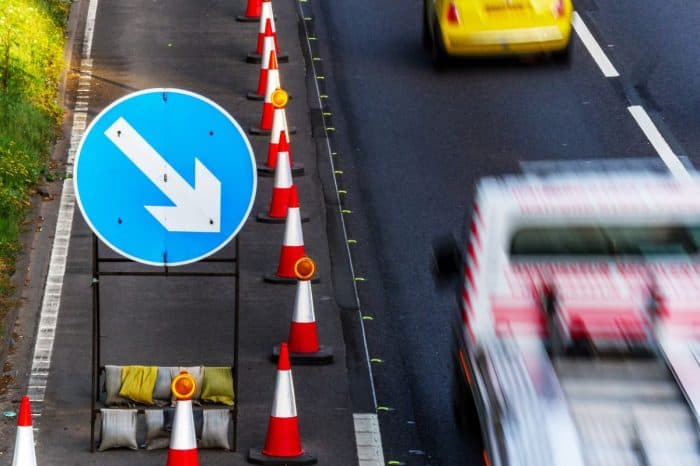
The term traffic management covers the temporary arrangements used to keep vehicles moving safely past roadworks. That can mean lane closures, temporary signs, reduced speed limits, cones, barriers and changes to how traffic is routed through a junction. At complex interchanges, timing matters almost as much as layout. A closure that is tolerable overnight can be a headache in the middle of the day.
We have seen the same balancing act elsewhere, whether in urban schemes or on the strategic network, where authorities are under growing pressure to keep works moving without choking the roads around them. National Highways is taking a similarly timed approach at M3 Junction 9, where closures are being stacked into defined windows rather than left to blur across the week.
For Raigmore, the facts released so far are straightforward. Daytime traffic management would be removed from Monday 10 August. It also said evening and overnight lane closures would remain in place until Friday 21 August. The disruptive part for daytime drivers is due to ease before the wider package is fully complete.
That matters because motorists tend to hear “roadworks continue” and assume the pain will stay exactly the same until the end date. It often does not. On live roads, schemes are usually phased, with different traffic management arrangements used as crews move from one part of the carriageway to another. Sometimes the hardest bit for traffic comes early, when a work area is being established or when space is tightest. Later phases can be less intrusive, even though the scheme is still active.
There is also a safety logic to keeping some restrictions in place at night rather than rushing to strip everything out. Crews need protected working space. Drivers need a layout they can read quickly. And at night, visibility drops, speeds can be less predictable and the margin for error narrows. If the choice is between a few more overnight lane closures or forcing a daytime arrangement that causes wider delay, the night shift often wins.
The dates matter here. From 10 August, daytime traffic management is due to be removed. Until 21 August, evening and overnight lane closures will continue. That gives road users a fairly clear picture: daytime journeys through Raigmore should become easier first, with remaining works then pushed into lower-traffic periods before the scheme wraps up.
For the sector, this is also a reminder that good traffic management is often judged by what the public stops noticing. No ribbon-cutting. No heroic machine shot. Just an interchange that becomes less awkward to get through while the last part of the works happens in the background.
For Inverness drivers, the so-what is mercifully direct. If you have been building extra time into daytime trips through the A9 Raigmore Interchange, 10 August is the date to watch. If you travel in the evening or overnight, keep watching for lane closures until 21 August. That is the unflashy truth of roadworks: sometimes the biggest improvement is simply getting your day back while the cones stay up after dark.
Stay sharp
Never miss a story
The daily highways digest, straight to your mailbox.
You will get a confirmation email. Unsubscribe anytime. About The Highways Industry Newsletter →