
ACO | Six-Part Series – Part 1 | Sustainable Drainage Systems (SuDS): The Future of Sustainable Water Highways Developments
 Matt Lambert Posted On November 1, 2023

In this new six-part series, authored by Terry Wilkinson, Specialist Design & Application Engineer at ACO Water Management, we look at how to take a sustainable water approach to highways drainage. Part one focuses on how SuDS can help engineers create environmentally-friendly highways, and changes in regulation to be aware of.
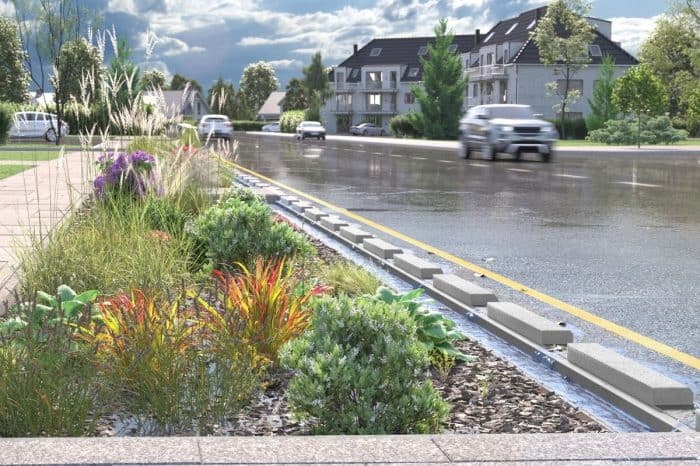
Sustainable drainage systems (SuDS) will be a familiar term to many highways and infrastructure engineers. These systems manage surface rainfall run-off by controlling the rate and volume of excess water on site, relieving pressure on sewerage systems and mimicking natural drainage as closely as possible. With better runoff regulation, it is possible to use highways drainage to implement principles of sustainable water and therefore mitigate environmental impact.
Sustainable water is a way of thinking about water management that benefits the environment through design, technology and ecological considerations. The overall goal is to improve the sustainable use of water and improve biodiversity. As part of this, SuDS are a resource that highways engineers must take advantage of.
As integral a role that SuDS systems have, in ACO’s latest survey of 100 highways and infrastructure engineers it found an astonishing 99% claim they have faced at least one barrier to implementing SuDS schemes.
Other findings, covered in ACO’s highways report, Highway Drainage: The Route to Surface Water Management, included that 55% of respondents worked on a project where maintenance of drainage was not considered, while 53% agreed that wildlife mitigation is an afterthought during the planning phase.
Used effectively, SuDS can help engineers design sustainable water drainage systems that blend into the surrounding environment. SuDS models should focus on four key pillars, namely water quality, water quantity, amenity, and biodiversity.
There are a number of reasons why SuDS are becoming more and more important. This includes being able to better manage rainfall and its natural cycle, which leads to the prevention of climate change, through to compliance with incoming legislation from government. From January 2024, Schedule 3 from the Flood and Water Management Act will be enforced across England (it is already in place in Wales), making SuDS mandatory across new schemes.
As an engineer, protecting the surrounding natural habitat and biodiversity of a project is paramount. Through SuDS, the benefits of an inter-connected, sustainable management system can be reaped, while giving back to the planet.


SuDS – The key decisions
When designed and maintained correctly, SuDS for highways are cost-effective and provide efficient drainage over the course of their working life. Comprised of both ‘soft’ and ‘hard’ components, the drainage solutions optimise materials that bring out the best in each other.
However, often, with conflicting demands, site and budget constraints, it can be difficult to know where to begin. Risk management needs to be at the forefront of an engineer’s mind when beginning any new highway project. One of the first considerations is understanding how water is collected and where it is channelled to, along with the load class of drainage channels.
Once water is collected at source using SuDS, contaminated run-off must be treated for any hydrocarbons and particles. Stormwater surges from exposed areas such as car parks and carriageways, carry high concentrations of pollutants and must be treated prior to release.
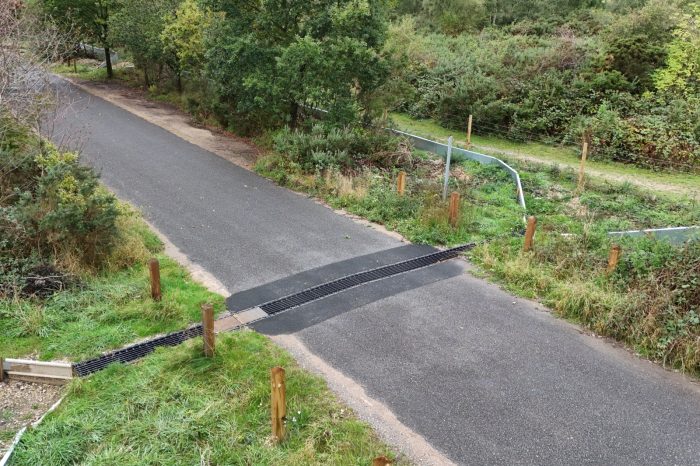
Having the right capacity in a surface water management system is vital for proper collection and slow release under maximum rainfall conditions. Using high-capacity drainage channels and attenuation tanks, such as ACO’s StormBrixx range, they can allow the required storage capacity while the rainfall is released at a sustainable rate.
There are a range of tools available to help engineers navigate SuDS. Surface software technology, for example, can help engineers make their own calculations while accounting for climate change and urbanisation factors through proven case studies.
By incorporating SuDS, accurate control of surface water is managed, meaning water entering the mains drainage network or local natural groundwater is done so safely.
Beyond the above, which focuses on managing water quantity and water quality, engineers will need to look at amenity and biodiversity too to achieve a complete SuDS scheme. In upcoming editions of this series, we will delve further into each area of highways design to uncover best practices and useful tips.
For more information on ACO Water Management and its range of drainage and water management solutions, click here. To read ACO’s Highway Drainage report, click here.
Contracts Watch
71 open highways tenders right now, plus who has just won what. Updated every hour.
Stay sharp
Never miss a story
The daily highways digest, straight to your mailbox.
You will get a confirmation email. Unsubscribe anytime. About The Highways Industry Newsletter →