
ACO – Six-Part Series – Part 6 | Drains That Do Good and Give Back Through Sustainable Water Management
 Marc Hobbins Posted On February 20, 2024
In the final part of this series, authored by Terry Wilkinson, Specialist Design & Application Engineer at ACO Water Management, we look at how drainage solutions can give back to surrounding environments and create sustainable water management.
At the beginning of this series, sustainable drainage systems (SuDS) and their importance to highway design were outlined alongside the ACO approach to their use. Using them correctly and in line with expert guidance can have significantly positive effects on controlling the quality and quantity of runoff surface water. Critical to managing flood risk and preventing pollution, SuDS schemes can have unintended negative impacts on surrounding environments if poorly managed.
Part of the reason for their mismanagement is often the constraints of space in highway design projects. What we tend to see when space is restrictive, is that SuDS are entirely left out of a project rather than adequate solutions explored and installed.
When it comes to the importance of space in highway drainage solutions, there remains a significant proportion of industry professionals who feel this is the most constricting aspect of the installation process.

In a survey by ACO, 100 highways and infrastructure engineers were asked about the principal barriers that they faced when designing new SuDS schemes. An overwhelming proportion of respondents agreed that space was the biggest barrier they faced when working on implementing SuDS as part of a drainage system, with 46% saying there was inadequate room on site.
In the same survey, 53% of respondents agree that wildlife mitigation is an afterthought. This is a worrying notion when the preservation and enhancing of natural habitats is crucial in avoiding potential litigation and wildlife harm.
Clearly the availability of space and wildlife mitigation is a vital aspect that engineers and industry professionals feel they are missing when working on new drainage designs. This presents an opportunity for industry professionals to offer up solutions for implementing SuDS with limited space.
Space to drain better
Executing a successful SuDS scheme depends on a variety of factors, all of which must work cohesively together to sustainably manage water.
Without adequate space, the potential for untreated water to negatively impact the surrounding habitats and wildlife becomes a significant risk. However, there are steps industry professionals can take to ensure space doesn’t restrict or prevent the proper implementation of SuDS or adversely impact biodiversity.
Comprehensive guidance to SuDS principles is available in the SuDS Manual (CIRIA C753), and it covers planning, design, construction, operation and maintenance of water management systems. The Simple Index Approach (SIA) can also help determine whether the proposed SuDS are adequate mitigation tools for the pollution hazard of the development. For industry professionals, ensuring personal knowledge of SuDS is up to date can eliminate some of the queries surrounding space allocation and how to approach smaller sites.
ACO advocates for the use of proprietary solutions where there are space constraints on site. They are often the most viable options if the surface water management system is largely underground. Where site constraints preclude the use of other methods or where they offer specific benefits in facilitating the delivery of SuDS design criteria for a site, they are especially useful.

Proprietary solutions are often subsurface structures and can be complementary to landscaped features. These solutions also prove beneficial when retrofitting drainage systems. Existing infrastructure such as sewer and water pipes or fibre-optic cables can pose obstacles to application due to the lack of depth available.
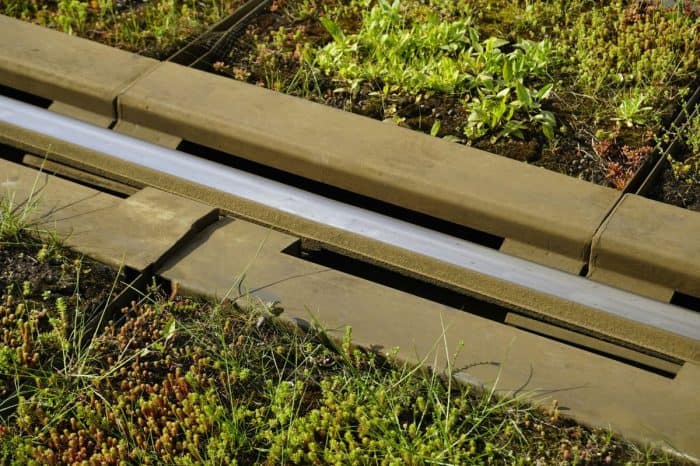
It’s in these situations where ACO’s KerbDrain can be a valuable solution due to its shallow profile and high invert specifications.
The negative impact of inadequate space on surrounding wildlife and habitats can also be mitigated through expert advice. Biodiversity and wildlife mitigation should be a key initial factor for highway engineers when designing drainage solutions – not an afterthought.
Cross discipline collaboration is crucial right from the outset, with engineers, landscape architects and ecologists for example, working alongside each other to understand which species may be affected at an early stage of the project. Infrastructure engineers can integrate wildlife mitigation measures into highway schemes such as ACO’s wildlife kerbs, escape ladders and guide tunnels to help provide connectivity for wildlife and positively give back to surrounding habitats.
For more information on ACO Water Management and its range of drainage and water management solutions, click here.
Stay sharp
Never miss a story
The daily highways digest, straight to your mailbox.
You will get a confirmation email. Unsubscribe anytime. About The Highways Industry Newsletter →