
120 metres up, one B1222 and the North Yorkshire road safety operation catching what patrol cars miss
 Jack Moriarty Posted On August 20, 2026
A drone, marked police bikes and roadside officers were deployed on the B1222 near Sherburn as North Yorkshire Police targeted dangerous driving and riding during the summer motorcycling season.

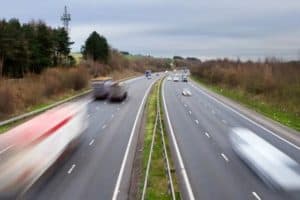
From the ground, the B1222 can look like just another fast rural road cutting across North Yorkshire.
From the air, it becomes something else: a long, open stage where risky overtakes, poor lane discipline and sudden bursts of speed are easier to spot than many drivers would like to think. That is why North Yorkshire Police sent a drone up over the route near Sherburn, east of Selby, as part of a targeted road safety operation.
In brief:
- North Yorkshire Police carried out a drone-led enforcement operation on the B1222 near Sherburn during the summer motorcycling season.
- The deployment involved the Roads Safety Team, marked police motorcycles and officers on the roadside.
- The focus was dangerous driving and riding on a route that attracts high numbers of motorcyclists in summer.
B1222 road safety is increasingly an aerial job as well as a roadside one
There is a practical reason for that. Traditional roadside enforcement catches what passes the officer. A drone can watch how a whole stretch of road behaves. It gives police a live overhead view of vehicle positioning, overtaking moves and how riders and drivers use bends, straights and junction approaches. On a road popular with motorcyclists, that matters. Many of the worst decisions happen in the few seconds between one vehicle pulling out and another suddenly appearing.
It is a reminder that road safety work is often less about the dramatic stop and more about seeing enough of the road to understand the pattern. A marked bike at the roadside can deter. A drone can observe. Officers further along the route can then intercept if needed. Put together, it is a fairly efficient bit of enforcement choreography.
The B1222 near Sherburn is the sort of corridor where that approach makes sense. Rural roads can feel forgiving right up to the moment they are not. Sightlines change quickly. Speeds tend to drift up. A manoeuvre that looks tidy from behind the wheel can look reckless from above. North Yorkshire Police said the operation was aimed at dangerous driving and riding as the summer motorcycling season continues.
That seasonal point matters too. Warmer months bring more leisure riding, more group rides and more traffic on scenic and semi-rural routes. The roads do not widen for that. They simply get busier, faster and less predictable. For highway authorities and police alike, summer risk is rarely about one mode alone. It is about mixing motorcycles, cars, agricultural vehicles and local access traffic on roads that were never designed for calm, evenly spaced flows.
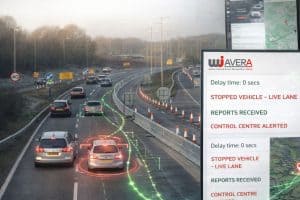
Overhead enforcement also speaks to a wider shift in how incidents and risky behaviour are being managed on the network. The same logic sits behind traffic monitoring, incident detection and some of the digital oversight now spreading across major routes: if you can see the road earlier and more clearly, you can intervene earlier too. We looked at a similar shift recently in the quiet expansion of digital systems that give operators a more connected view of what is happening on the network.
For drivers, the message is simple enough. The empty stretch ahead is not the whole picture. On roads like the B1222, enforcement does not need to be parked in front of you to be present. For riders, especially on popular summer routes, the old assumption that a quick overtake is visible only to the vehicles involved is looking increasingly dated.
For the sector, the more interesting point is how this kind of operation blends visibility and evidence. A roadside officer can deal with an immediate offence. A drone can help document the lead-up to it: road position, following distance, overtaking line, interaction with oncoming traffic. That wider view can make enforcement more targeted and, in theory at least, more defensible.
It also fits the geography. The B1222 is not a motorway with gantries, fixed cameras and a regional control room watching every movement. It is a local road where selective, mobile enforcement has to do more with less. A drone is not a magic answer, but it is a relatively nimble way to cover ground that would otherwise need several fixed observation points and a fair bit more time.
The result is a version of road safety work that many road users will barely notice unless they are the reason it is there. No cones. No lane closures. No giant warning sign announcing a crackdown in block capitals. Just a police team, a patch of North Yorkshire road and a camera high enough to see the mistake before the driver has finished making it.
Stay sharp
Never miss a story
The daily highways digest, straight to your mailbox.
You will get a confirmation email. Unsubscribe anytime. About The Highways Industry Newsletter →