Could glowing road studs stand in for street lights? Three councils get to test it
 Megan Gilks Posted On

Three councils will each receive up to 100 SolarLite road studs, free and installed, to test on a real highways problem. Here’s what the challenge offers, what authorities pay for, and the 30 November deadline.

Image: SolarLite
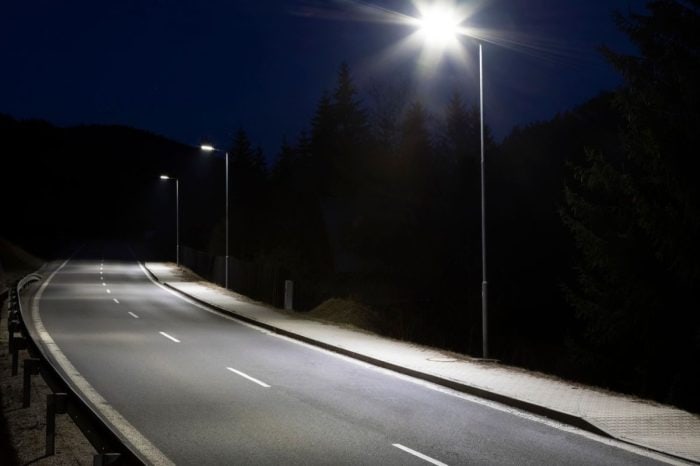
Three councils will each receive up to 100 active road studs, free of charge, to test on a real problem on their own roads. For one of the two strands, the question is whether the studs can do some of the work of a street light.
In brief:
- SolarLite, part of Clearview Intelligence Group, and the Local Council Roads Innovation Group (LCRIG) will fund three local authority schemes, each with up to 100 SolarLite active road studs and standard installation
- Authorities can apply on road safety, or on reducing carbon and street lighting costs, by 5pm on 30 November 2026
- The studs and installation are free, but councils must arrange and fund traffic management, closures, permits and approvals
What the SolarLite road studs challenge offers councils
The challenge launches LCRIG’s Innovation in Action series. It builds on evidence from the ADEPT Live Labs programme in East Riding, taking the technology from Live Labs to local roads. It’s open to local and highway authorities across England, Wales, Scotland and Northern Ireland that are responsible for the location they propose, and an authority can submit more than one application if each covers a different location.
Applicants choose one of two challenges. The first is road safety: a difficult roundabout, junction, bend or rural road where drivers could benefit from clearer guidance of the road ahead. The second is reducing carbon and street lighting costs: a location where lighting is costly to run or due for renewal, or where an authority wants to cut energy, carbon and cost while keeping effective road delineation. Here the studs are offered as an alternative or complementary approach to conventional street lighting.
Clearview describes SolarLite Path as a 360-degree in-ground LED light powered by solar energy, designed for pedestrian and cyclist routes with no mains power or street lighting. It uses low-intensity, ground-level light to limit upward light spill, which Clearview says suits Dark Skies areas and nocturnal wildlife such as bats. The company says a full eight-hour charge gives 240 hours of operation, and quotes an eight-year lifespan with no cleaning or servicing.
Each successful authority will receive up to 100 studs with standard installation, technical assessment and scheme design support from Clearview, an in-person planning and site meeting, and help setting an evaluation plan and baseline. They’ll also be able to develop an evidence-led case study with Clearview and LCRIG, promoted through LCRIG’s Knowledge and Innovation Network. All of that is subject to site assessment, technical approval and final scheme design.
The small print matters here. Participating authorities are responsible for arranging and funding any traffic management, road closures or diversions, permits, statutory approvals and other excluded site or third-party costs. The studs and installation are free. The road space to fit them isn’t. Because the case study is developed with the supplier, the evaluation plan and baseline each authority agrees at the start will matter when the results come in.
Two webinars will help applicants. The road safety session is at 11am on 3 November, and the carbon and street lighting costs session is at 11am on 10 November. Applications close at 5pm on Monday 30 November 2026. The judging panel includes the Department for Transport’s chief scientific adviser, Professor Patricia Thornley.
For authorities weighing lighting costs, our explainer on what street lighting maintenance involves shows what a lighting stock costs to keep running.
For full details, and how to apply can be found here.
In this story Local Council Roads Innovation Group (LCRIG), Clearview Intelligence