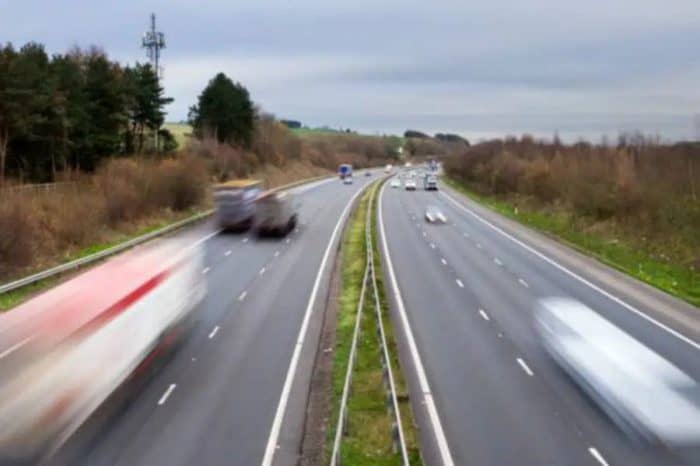


Somerset warns local road network cannot absorb M5 closure traffic as pressure mounts on diversion routes
 Jack Moriarty Posted On May 22, 2026

Roads across Somerset are struggling to cope with traffic diverted from the M5 during motorway closures, according to local authority concerns highlighting growing pressure on the wider strategic and local road network.
The issue has prompted renewed calls for closer coordination between Somerset Council, National Highways and Somerset Police to improve how motorway incidents are managed and how diversion traffic is handled across surrounding routes.
Rising Concern Over Frequency and Impact of M5 Closures
Somerset Council has raised concerns that sections of the M5 are closing with increasing regularity, placing significant strain on surrounding A-roads and local highways infrastructure.
While motorway closures are often necessary following serious incidents, the resulting traffic displacement is creating congestion and disruption across the wider county road network, which was not designed to accommodate such high volumes of strategic traffic.
Council leaders have stressed that the issue is not only about the duration of closures but also about the cumulative impact on communities, businesses and daily travel patterns.
Pressure on Local Road Infrastructure During Diversions
When the M5 is closed, traffic is routinely diverted onto lower-capacity routes, many of which are already operating close to capacity under normal conditions. This results in bottlenecks, slower journey times and increased pressure on junctions and signal-controlled corridors.
Local authority representatives have highlighted that while motorway closures are sometimes shorter in Somerset compared with other regions, the surrounding network is less resilient in absorbing displaced traffic flows.
This structural imbalance between strategic and local routes is increasingly seen as a key challenge for network resilience in the South West.
Calls for Improved Multi-Agency Coordination
Somerset Council has called for closer joint planning between highways authorities and emergency services to improve how the M5 corridor is managed during incidents.
The focus is on developing more coordinated response strategies that consider both the motorway itself and the downstream effects on surrounding roads. This includes exploring how diversion routes are selected, how traffic is managed in real time, and how signal timings and flow management could be adapted during major incidents.
Council leadership has indicated that the aim is not to assign blame, but to establish a more integrated approach to incident management that better reflects real-world traffic conditions.
Emergency Response and Incident Management Challenges
Avon and Somerset Police have emphasised that motorway closures are often necessary following serious collisions or incidents requiring investigation, recovery and safety assurance measures.
Closure durations can be influenced by multiple factors, including the severity of incidents, the need for forensic investigation, and the requirement to safely clear damaged vehicles and debris from live carriageways.
While agencies work to reopen routes as quickly as possible, operational priorities must balance speed with safety and legal obligations.
National Highways Engagement on Network Resilience
National Highways has acknowledged the impact that unplanned closures have on surrounding communities and has confirmed ongoing engagement with both emergency services and Somerset Council.
Discussions are focused on identifying opportunities to improve incident response processes and reduce disruption where possible, particularly in relation to diversion management and cross-agency coordination.
Wider Transport Resilience and Planning Implications
The situation on the M5 highlights broader challenges facing the UK’s strategic road network, particularly where high-capacity motorways interface with more limited local infrastructure.
Key issues emerging include:
- Limited resilience of A-road diversion routes
- Increasing dependency on strategic corridors such as the M5
- Pressure on junction capacity during unplanned closures
- Need for smarter, real-time traffic management systems
- Greater coordination between national and local highway authorities
As traffic volumes continue to rise, the importance of integrated corridor planning and network resilience is expected to grow across the highways sector.
Explore more: Visit our Associations and Bodies section for the latest updates on trade bodies, professional institutions, and associations driving standards in the UK highways sector.
Stay sharp
Never miss a story
The daily highways digest, straight to your mailbox.
You will get a confirmation email. Unsubscribe anytime. About The Highways Industry Newsletter →