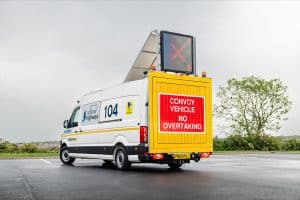

£100,000 in smart motorway fines shows the red X problem still isn’t solved
 Jack Moriarty Posted On August 21, 2026
More than £100,000 in smart motorway fines points to a stubborn red X problem: drivers are still entering closed lanes, long after the warning sign has lit up above them.

A red X is one of the simplest signs on the motorway, and still one of the most ignored.
New research shows drivers have paid more than £100,000 for entering lanes that were closed on smart motorways, a figure that lands with a thud because the point of the sign is not paperwork or penalty income. It is to keep people out of a live hazard.
In brief:
- Drivers have paid more than £100,000 in fines for ignoring red X lane closure signs on smart motorways.
- The RAC said it was “concerning” that motorists were continuing to flout the rules.
- A red X means a lane is closed, usually because of a breakdown, a crash, debris or roadworks ahead.
Why smart motorway fines matter when a red X appears overhead
The odd thing about red X enforcement is that it deals with behaviour most drivers know is wrong already. A closed lane is not a suggestion. It is a live traffic management instruction used to create space around an incident, protect stopped vehicles, shield emergency services, or hold traffic away from roadworkers. Ignore it and the risk is not abstract. You can end up driving straight into the bit of motorway everyone else is being steered away from.
That is why the six-figure total matters. It is not large by the standards of network-wide enforcement, but it is large enough to show the message is still not cutting through cleanly. On a strategic road network increasingly managed by overhead signs, lane control only works if drivers treat those signs as real road space instructions, not advisory lighting. The painted lines drivers rely on at night matter too, which is why schemes like road marking renewals on the M80 can have an outsize effect on how clearly a traffic layout reads at speed.
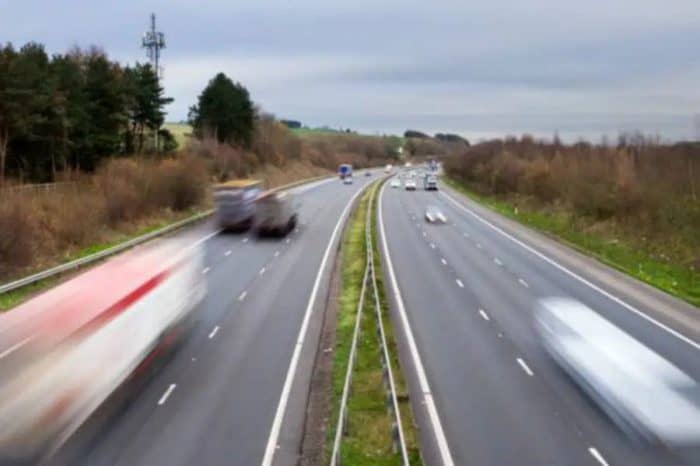
For non-specialists, the red X does one job. It closes a lane. On smart motorways that instruction is displayed on overhead gantries, often alongside lower speed limits in the lanes that remain open. The closure may be triggered because there is a stranded vehicle ahead, because emergency services need a protected area, because roadworks have taken one lane out, or because traffic officers are managing queues after a crash. However it starts, the logic is the same: keep moving traffic out of the danger zone early, not at the last second.
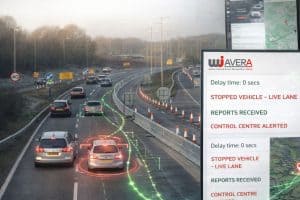
That is also why enforcement has become such a sensitive test of whether smart motorway operation is understood by the public. If a driver passes beneath a red X and carries on in the closed lane, it undermines the whole managed system. Safe refuge areas, stopped vehicle detection, queue protection and incident response all depend on motorists complying with lane signals when they appear. If they do not, the closed lane is no longer reliably closed.
The RAC’s description of the findings as “concerning” is a restrained way of putting it. For the people working on or beside the carriageway, this is the motorway version of someone walking through a locked door because they do not like the sign on it. It turns a controlled environment back into guesswork.
There is a wider lesson here for road safety beyond smart motorways themselves. Drivers are now expected to read more live information from the road than they once did. Variable mandatory speed limits, lane control signals and overhead warnings all ask for fast decisions at speed. Most of the time that system works. When it does not, the failure is rarely dramatic until the moment it is. Then it is very dramatic indeed.
For drivers, the practical rule is uncomplicated. A red X means do not use that lane. Move out of it as soon as it is safe to do so. Do not drive on in the hope that the closure starts further ahead, and do not treat an empty-looking lane as spare space that everyone else has somehow missed. If the sign is lit, the lane is closed.
For the sector, the more awkward question is what finally changes behaviour: clearer public messaging, more consistent enforcement, better gantry visibility, or simply time. More than £100,000 in smart motorway fines suggests none of those has finished the job yet. A symbol with one meaning should not still be losing an argument with driver impatience.
Stay sharp
Never miss a story
The daily highways digest, straight to your mailbox.
You will get a confirmation email. Unsubscribe anytime. About The Highways Industry Newsletter →