
Five screens below, five above: the transport control jobs most drivers never see
 Jack Moriarty Posted On September 1, 2026
Traffic management jobs sit far from the carriageway as often as they sit on it, from rail signalling desks to roadside response teams dealing with closures, diversions and the mess after things go wrong.

Some of the most important transport jobs in England happen in rooms most travellers will never enter.
One rail signaller described working with five screens at eye level and another five above, a reminder that keeping people moving is rarely as simple as one person watching one road, one track or one incident. It is a network job. It is also a job that only becomes visible to the public when something has already gone wrong.
In brief:
- A new national look at transport workers highlights the hidden people who keep journeys moving across England.
- Traffic management covers far more than cones and lane closures, including control rooms, signalling, diversions and incident response.
- For road users, that work is felt as fewer delays, safer closures and quicker recovery after collisions or breakdowns.
Why traffic management jobs are much bigger than roadside cones
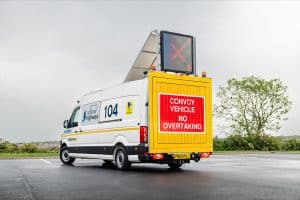
Ask most drivers to picture traffic management and they will usually think of the obvious kit first: temporary signs, barrier systems, convoy vehicles, portable signals and crews in orange on the hard shoulder or verge. Fair enough. That is the part you can see from the driver’s seat. But the transport system depends just as much on the people making decisions before a lane closes, while it is closed and after it reopens.
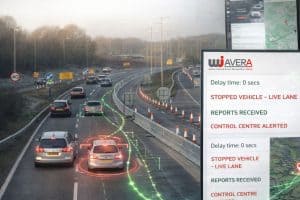
That hidden layer includes control room staff monitoring incidents, signallers sequencing train movements, operators adjusting network plans and response teams working out how to contain disruption before it spreads. On roads, that can mean deciding whether a breakdown needs a live-lane closure, how a diversion route will cope with displaced traffic, when recovery can safely enter the carriageway and how long drivers are likely to be held. On rail, it means balancing safety, timetable pressure and platform capacity in real time.
The public usually meets this work at its most frustrating moment: the red X is lit, the motorway gantry has cut a lane, or a diversion takes traffic down roads that clearly were not built for everyone who has just been sent there. Yet those decisions are rarely arbitrary. They are part safety buffer, part logistics exercise and part damage limitation. A short closure can stop a small incident becoming a long one. A badly timed one can do the opposite.
That is why the control-room side of transport deserves more attention than it gets. The person at the desk is not just looking at a jam. They are looking at knock-on effects. If one route closes, where does the flow go next? What emergency access still has to be protected? Which lanes or junctions will seize up first? On the strategic road network, National Highways has to think about the motorway in front of it and the local roads that inherit the problem a few minutes later.
The same logic applies well beyond roads. The image of a signaller facing 10 screens is vivid because it captures how modern transport is managed: layered information, constant monitoring and no shortage of consequences if something is missed. It is not glamorous. It is deeply operational. And it is one reason transport still needs people who can make fast, defensible calls under pressure.
For the highways sector, that matters because labour shortages are not only about boots on the ground. The industry needs roadside crews, yes, but it also needs planners, coordinators and operators who understand how temporary traffic management interacts with live networks. A closure plan that looks tidy on paper can become a nuisance or a risk if the live conditions change. The work sits somewhere between engineering, safety practice and public diplomacy, which is a polite way of saying somebody gets shouted at whatever they choose.
There is also a public misunderstanding built into the phrase itself. Traffic management sounds administrative, almost passive, as if vehicles naturally move and someone merely tidies up after them. In reality, it is active network control. It shapes how quickly incidents are contained, how safely maintenance can happen and how much pain leaks into neighbouring routes. Pieces like this recent look at an M1 closure operation show just how many moving parts sit behind what drivers experience as one abrupt message on a sign.
That gap between what the public sees and what the job involves helps explain why these roles are often overlooked. If the system works, nobody notices. If it fails, everybody notices at once. There is no quiet middle ground. For the people doing it, that means long shifts, concentration-heavy work and a professional culture built around avoiding the headline rather than appearing in it.
The wider point is that transport resilience is not only built with concrete, steel and surfacing gangs. It is also built with judgement. England’s roads, railways, airports and bus networks still rely on workers whose biggest contribution is often preventing a bad day from becoming a much worse one. You may never meet them. You will certainly notice when they are not there.
For drivers and passengers, the practical effect is simple enough. The next lane closure, diversion route or delayed departure may still be annoying. No article can make a queue enjoyable. But it is worth remembering that behind the signs and screens is a set of traffic management jobs designed to protect people first and then restore movement as quickly as conditions allow. Transport looks mechanical from the outside. Underneath, it is still very human.
Stay sharp
Never miss a story
The daily highways digest, straight to your mailbox.
You will get a confirmation email. Unsubscribe anytime. About The Highways Industry Newsletter →